Showing posts with label seeking. Show all posts

Thursday, December 31, 2020

99: Spark of Splendor - hey, I tried

 Chapter 10, Text 41: Know that all opulent, beautiful and glorious creations spring from but a spark of My splendor.

This afternoon I walked out my front door with my fabulous Sony A6000 camera in hand. Meditating on this verse of the Gita, I was determined to discover sparks of God's splendor outside my front door. 

I snapped pictures of angular palms, yellow leaves gleaming in the sun, red leaves peeking out of the forest floor, the bright green of a tiny tuft of a leaf amidst a sea of gnarled branches. 

Okay, okay, lots of leaves. 

I tried to ambush an ant for a picture, but they just scuttled away, and I couldn't focus my gigantic camera lens in time to capture them. So there went that. 

I tried to capture the beams of sunlight that filtered through the forest and landed upon my face. The experience of absorbing that  liquid gold was lost when I took a picture, even with my fancy camera. Might as well have had my phone camera. 

To be honest, I live down a quiet dirt road. It's lovely and soothing and peace-giving to my heart when I want to clear my head and bask in the silence of the woods. But I'll tell you what, it's not much of a "spark of splendor." 

Halfway back, I navigated on my camera to view a picture I had taken, to double-check the angle. 

NO MEMORY CARD. CANNOT READ. 

Huh? 

I opened up the battery case and saw that indeed I had a memory card inserted. I tried again. Nope. No use. Later on at home I inspected the card to find that it was chipped and broken. 

I sighed. All those pictures I thought I had taken of sparks of splendor were... well, gone. 

Like a spark that flares brightly for a dazzling moment, then gone. Forever. Just a spark. 

Two things I take away from this experience. 

1) If I train my eye to see God's glory in even the tiniest leaf, or a beam of sunlight, or the veins of my hand, then that is the greatest glory. 

2) Before I set out on a photo shoot, check to make sure my memory card is working. 

98: Time I Am

My phone rang. I rolled over in the dark and fumbled around until I answered the call, "Hello?"  

"Hey Charles, a nurse in the Emergency Room is requesting a chaplain. A patient may be on his way out, and there's no family,"

"Anything else I should know?"

"The patient was mugged and shot. The bullet has been removed, but he's in critical condition,"

"I'll be there," I managed. My bleary eyes focused on the glowing alarm clock: 2:15am. I left the bedroom light off and swung my feet around to the cold wooden floor, pausing to ensure there was no movement or sound from my wife. We were expecting our first child, a son, in a few months, and my wife had been sleeping fitfully for weeks, usually made worse by the nights I was on call. I glanced at her face, took a breath, and crept out of the room. 

I brushed my teeth, shrugged on some clothes and a coat and made my way out into the streets of New York City. Dirty snow piled up along the sidewalks, and I breathed in icy air. If I wasn't awake before, I sure was by the time I flashed my ID at the security guard. 

Shot? No family? What had happened with this man? Questions kicked my mind. I reminded myself that finding out answers to my questions was not my job. My job was to be there for others in their suffering, to offer spiritual care in time of need through prayer, guidance, and above all, listening.  

When I listened, the questions would get answered. 

Or they would dissolve into the night.

I made my way through the dimly lit emergency room; I passed a woman with a mangled, swollen face, a man with bloodied jeans and an elevated leg wrapped in bandages, and other men and women with obvious and not-so-obvious pain. 

A few beds had curtains drawn around them. When I reached bed 88, I paused. I folded my palms. Help me God, I prayed. Help me, Krishna.  

I parted the curtain.  

A young man lay on the bed wearing a pale blue hospital gown, but I could see the edges of a white bandage that covered his upper right chest. His round, youthful face surprised me. Brow furrowed and eyes closed, his chest rose and fell somewhat unevenly. The beep of his heart rate monitor mingled with the monitors of others in nearby beds.

I approached the young man. Not wanting to wake him, I sat in one of the chairs next to the bed and folded my palms and prayed. 

Time passed by in strange, thick waves that night. At one point a nurse came in to fill me in on some more details and confirmed that the doctors had done all that they could. Although they had stabilized him as much as possible, the young man was declining - his heart had been irrevocably damaged.    

I stayed in the room, a coldness creeping into my limbs. Would this young man die alone here in Bed 88 of the Emergency Room? I mean, I was here. I resolved in those moments to stay until the end, even if I was no longer on my shift. But he had no family? Friends? 

"Who are you?" 

I started in my chair and turned to look at the curtains that had parted. A middle-aged woman stood there, her face drawn, her hair in ragged gray wisps. 

I stood. "I'm Charles Rossman, I'm with the spiritual care department," 

The woman regarded me warily. "Are you Christian?"

"Actually, I'm a Hindu chaplain,"

She frowned. "You don't look Hindu," 

I was quiet.

"But... thank you for coming. I'm Mrs. Graham," The woman's eyes landed on the young man and her face sagged. She stepped forward to his bed and wrapped her hands around his hand. "Matthew," she murmured. 

"I'll step out until you need me," I said.

"No," she turned to me, her face fierce. "Don't go, please,"

I bowed my head. "Sure, ma'am, I'll stay,"

She turned back to the patient and said, "My Matthew loved people. He would've wanted to have been surrounded by people at... this time." Tears began to pour down her face, her body wracked with gentle sobs. "Chaplain," she said, "I just got this news a few hours ago. I've been driving in the dark to get here, blinded by tears. I've had to pull over a few times to cry." The woman turned to me, her eyes bloodshot. "I can't even process that my son is dying. He is such a bright young man. You're spiritual care. Tell me something, anything," 

"The first step," he said gently, "Is to just be with your grief, even though your mind is so overwhelmed with grief*,"

"Grief is drying up my senses**, chaplain, it's hard to even see or hear you, or my son. I can't think straight,"

"For now, just be with your grief,"

"If I give in to grief, though, it seems like an ocean with no shore and I'll drown. I can't drown right now. I have to be here for my son. But I'm drowning. Please help me." The woman collapsed into a chair, her head in her hands. 

I had learned to stay afloat, to not drown in other people's grief. I had been a chaplain for over a decade - I had seen death come to babies, teenagers, middle-aged men and women, the elderly, and everyone in-between. Death could be heart-wrenching, confusing, terrifying, beautiful, profound - sometimes all those things at once. I had learned to be there for others with a gentle presence of compassion, and I had learned to let the emotions of death and suffering wash over me and away. I would not be able to function or live my life if I let each stroke of suffering and each death consume me. 

Unbidden, though, came the image of my wife resting in our bed, the light from the streetlamps filtering in to touch her face. Within her body, she carried our son. 

What if one day she received a call in the middle of the night like this? Decades of love poured into raising a good, strong man, our lives revolving around caring for him. The bonds of our hearts as strong as a thousand silk ropes.

Then with the shot of a gun, ripped away from us. Forever.

I began to sweat. My throat became dry. Silence smothered the room. 

"Chaplain?" Mrs. Graham said. She observed me, her face streaked with tears. 

The deaths I had witnessed or been a part of over the past ten years flooded my brain with images and sensations. So much pain. So much suffering. So much loss. I sucked in a breath. 

Now who's drowning? I thought. Trying to help a drowning man could mean drowning myself.

"Mrs. Graham, may I be excused?" 

She looked at me, wary and concerned. She nodded. 

I stepped outside of the curtained partition and took deep breaths. I walked away, down the emergency room past broken bodies and took a seat on the edge of the room. The deaths rushed at me, wave after wave. Not only the deaths of those I had experienced as a chaplain, but the death of my grandmother, the death of my cousin at the ocean one day, the death of a friend in college in a car accident, the deaths I had heard about in the news - school shootings, terrorist bombings, wars, earthquakes in Nepal... the deaths of entire species from overhunting and blazing fires that were overtaking the world more and more and the deaths of this choking earth.

My breaths became ragged again. My face was hot, I could feel wetness on my cheeks. I sipped air. 

In the midst of the flames of what I was seeing, the words I had been saying for so many years before I entered a room to help a patient or a patient's family surfaced: Krishna, help me.  

I grabbed onto those words. Krishna, I pleaded. How can this be? You are all good. You are supposed to be. 

A verse from the Bhagavad-gita spoke to me: Time I am, great destroyer of the worlds.*** 

Time. By dint of time, everyone was rushing into the mouth of death. Every single last one of us. No one would be spared - not me, my wife, or unborn child. We would all be destroyed. Not only living beings, but worlds

My chest began to shudder each time I drew breath, my hands trembled. The truth of death may be real, but the pain, the overwhelming pain of it all twisted me up. That young man did not deserve to die. Not like this. I buried my head in my hands. 

Krishna, help me. Soothe my heart. 

After seeing this form of yours as Time, my mind is disturbed with fear, Arjuna had spoken in the Gita. Please bestow Your grace upon me and reveal Your form as the Personality of Godhead, Krishna. ****

Behind my closed eyes came the image of Krishna - this Krishna was a deity who resided in a temple in the Lower East Side. He was made of white marble, about three feet tall. He held a flute to his lips, and a smile played on his face. His eyes soft. Luminous. Others might say He was a statue. To me, God had come in a form that I could see and exchange a glance with. 

The mahamantra, the prayer composed to Krishna and the divine feminine, Radha, flowed over my fever in cool waves, over and over again. 

Hare Krishna Hare Krishna, Krishna Krishna Hare Hare,
Hare Rama Hare Rama, Rama Rama Hare Hare

I don't know how long I sat there, murmuring the mahamantra, my mind fixed on Krishna's beautiful form.

Still, the pull of my duty commanded me to stand up, do my job. Be there for others. Care for others.

With a deep, shuddering breath, I rose to my feet. I went to the restroom to wash my face, and then set my feet back to Bed 88. 

"Hello," I said from the other side of the curtain. 

"Yes?" Mrs. Graham responded.

"May I come in?"

"Yes," she said. 

I parted the curtain. Mrs. Graham was gazing at the face of her son, a hungry expression turning her features raw. "He's going to leave soon," she said, "I can feel it." She turned to me. "What can we do?"

She did not mean what could the two of us do to save him. What could we do to... to care for him in the deepest sense. 

"We can pray," 

The woman scoffed, but tears softened the harsh sound. "I don't believe in prayer," but a look of desperation fell over her when she turned to the face of her son. "But I have to try something. We. We have to try something to..." 

"I can pray in silence, if you prefer," I said, coming closer and taking a seat next to her. My inner tempest had calmed to the stillness of a lake. 

"No, no, Matthew should hear your prayer," she paused, then looked over at me. "You said you were a Hindu chaplain. What kind of prayers do Hindus do?" 

"The foremost prayer we make is one of love, a kind of calling out to God, to Krishna, with all of our hearts,"

The woman's eyes softened for the first time, and silence fell around us, only punctuated by the erratic beeps of the heart monitor. 

"Whatever it is you do in your tradition," she said, "I give you permission to do it with all of your heart," 

I hesitated. Whatever we do in our tradition? Would it be... improper at this time? Unsuitable?

But Mrs. Graham was looking at me expectantly. Now was not the time to debate propriety and details. 

So I looked over at Matthew, whose brows were furrowed, and sang the mahamantra. I sang in a soft tone, a gentle, simple melody. I circled to Matthew's right side and held his hand while his mother held the other. I brought to mind the image of Krishna and sang and sang. Tears poured down Mrs. Graham's face in silence and stillness.   

Matthew's heart rate became irregular and slowed. The furrow smoothed on his face, the tension I could feel in his fingers dissolved. I sang, my voice becoming hoarse, but I continued on. 

Then, the young man took a breath and exhaled. He did not inhale again. The heart monitor flatlined. Mrs. Graham closed her eyes. "Take care of him, take care of him," she murmured. 

I sang one last mahamantra and then fell quiet, holding Matthew's still-warm hand. 

*1.46
**2.7
***11.32
****11.45

Note: This story was inspired by my husband's line of work as a hospital and hospice chaplain, as well as Arjuna's experience of viewing Krishna's universal form in chapter 11. In this section, Arjuna views the flaming rivers of death and is utterly terrified, and Krishna tells him that He is time, destroyer of the worlds. Arjuna asks to be pacified, and Krishna eventually reveals to His friend his beautiful, two-armed form as Krishna once again. 


95: Offer With Love and Devotion

 Creative Expression: Bhagavad-gita, Chapter, Verse 26

Full text here: https://vedabase.io/en/library/bg/9/26/

Tuesday, December 29, 2020

94: The Yoga Ladder


 CHAPTER 12, TEXTS 8-12

TEXT 8:
 
Just fix your mind upon Me, the Supreme Personality of Godhead, and engage all your intelligence in Me. Thus you will live in Me always, without a doubt.
TEXT 9:
 
My dear Arjuna, O winner of wealth, if you cannot fix your mind upon Me without deviation, then follow the regulative principles of bhakti-yoga. In this way develop a desire to attain Me.
TEXT 10:
 
If you cannot practice the regulations of bhakti-yoga, then just try to work for Me, because by working for Me you will come to the perfect stage.
TEXT 11:
 
If, however, you are unable to work in this consciousness of Me, then try to act giving up all results of your work and try to be self-situated.
TEXT 12:
 
If you cannot take to this practice, then engage yourself in the cultivation of knowledge. Better than knowledge, however, is meditation, and better than meditation is renunciation of the fruits of action, for by such renunciation one can attain peace of mind.

93: Happiness - Poison -> Nectar


CHAPTER 18, TEXT 37: That which in the beginning may be just like poison but at the end is just like nectar and which awakens one to self-realization is said to be happiness in the mode of goodness.


91: Happiness - Nectar -> Poison


CHAPTER 18, TEXT 38: That happiness which is derived from contact of the senses with their objects and which appears like nectar at first but poison at the end is said to be of the nature of passion.

Friday, December 25, 2020

87: "Rereading" Thrills

CHAPTER 18, TEXT 76: O King, as I repeatedly recall this wondrous and holy dialogue between Kṛṣṇa and Arjuna, I take pleasure, being thrilled at every moment.

When I was in second grade (7 years old) I read my first novel cover-to-cover in one day. The novel was a part of the larger Goosebumps series, a kind of junior horror series. 

To this day, I'll devour thick bricks of books in a day. Many a time I have stayed up until two in the morning, sometimes even until the sun rises, finishing a novel. 

The thing is, I usually finish a book with a heavy sigh. I didn't like the main character's choices. I didn't like the romance. I didn't like the ending. Of maybe a book was just mediocre. A nice escape for awhile, but... nothing special. 

Every so often I'll read a book that's actually worth a reread. Out of the literally hundreds and hundreds of books I've read in my lifetime, I could probably count out the books I've reread. 

And the second time around is always a little so-so. The third time around is even more so-so-so. 

But the Gita? 

I just finished reading the entire Gita (took me a year ;) and I just want to read it again. 

I want to memorize verses. I want to talk about it with friends. Sometimes I'll talk about one verse for hours with my husband or a friend. I'll meditate on the meaning while I'm out in town, or taking a walk, or journaling. Prabhupad writes, "The understanding of Bhagavad-gītā is so transcendental that anyone who becomes conversant with the topics of Arjuna and Kṛṣṇa becomes righteous and he cannot forget such talks." A beautiful, significant phrase that Prabhupad uses here is "becomes righteous." I have found that the more I think on and remember the Gita, I find my actions becoming aligned with righteousness. For example, I am more conscious to offer my food (3.13) before I eat it. This one little thing is transforming my relationship with food - be a little more detached, Bhakti. Let God enjoy first

I can't forget "such talks." In this way, the words of the Gita come alive for me more and more. Unlike novels, these words never age, never get old, never get stale. These words become more and more brilliant. 

Today my husband and attended Christmas mass at our local Catholic church. The priest mentioned, in his brief homily, how in the beginning there was the word, and the word became flesh (John 1.14). The word is flesh - the word is alive. The word is substantial, something we can touch and feel and experience in our lives. We have a relationship with the word. 

By taking this word into our hearts, our lives catch fire with meaning and purpose and joy and love. Prabhupad writes, "The result of Kṛṣṇa consciousness is that one becomes increasingly enlightened, and he enjoys life with a thrill, not only for some time, but at every moment." What an amazing prospect. In this world, our thrills are cheap. 

Novels last a day. 

Movies last a couple hours. 

Food lasts a few minutes. 

Fireworks last a couple seconds. 

The thrills of the Bhagavad-gita work in the reverse. Prabhupad says that one "enjoys life with a thrill, not only for some time, but at every moment". The prospect of a thrill that increases in time blows my mind. I have so little frame of reference in this material world - all my little joys and thrills have always, always faded. 

Yes, I must confess, even my spiritual thrills.  

The difference, though, is that when I experience a spiritual thrill, even when it fades it leaves an impression on my heart - I want to experience that again. 

I want to "reread" that. Again and again and again - every time I "reread" a spiritual experience, I experience more joy than before. Whether that's singing, or dancing, or reading the Gita, or conversing with friends about the Gita, or countless other activities, I just want to stay in them forever. 

Full purport here: https://vedabase.io/en/library/bg/18/76/

Thursday, December 24, 2020

86: I Am Here

Creative Expression: Found Short Story/Pem (fiction)

This post is in the format of a Found Short Story/Poem; the words in italics are words taken directly from the verse and/or purport. The words in standard font are my own words. 

CHAPTER 7, TEXT 9 

Alone on a Saturday night in the city, a woman sits upon her velvet couch with a book in her hands. She used to fold her palms on Saturday nights like these to talk to God, but the years of silence in return ate away at her palms and she stopped folding them. 

The silence has eaten away at her neck and shoulders and now her face and her tongue. The silence of her apartment squeezes her chest like a vice. Years of chatter with coworkers, years of business proposals with clients, years of laughter at sitcoms on Netflix.

But the silence keeps growing.

No one speaks to her. She speaks to no one. 

Tonight she stares into space. Tonight gravity pulls at her bones. Tonight - away from the subway, away from her office, away from her clients - raw yearning eats away at her gut. She is surrounded by people above, below, and on all sides, and yet she is alone, 

alone, 

alone.

Where are you? she asks into space. She hears a clock tick in the kitchen. 

The woman sips her tea. She flips open the book a man in the subway sold to her - The Bhagavad-gita As It Is.

She pushes the pages through her fingers, the pages flipping by in a cool whisper. She stops the page, somewhere in Chapter 7. 

I am the original fragrance of the earth, the text says. 

Like a whisper in her ear. 

Everything in the material world 

has a certain flavor 

or fragrance, 

as the flavor 

and fragrance 

in a flower, 

or in the earth, 

in water, 

in fire, 

in air.

The uncontaminated flavor,

the original flavor, 

which permeates everything, 

is Kṛṣṇa.

The woman tastes the tea that lingers on the roof of her mouth. Rose. Jasmine. Something else. 

Rose. 

Jasmine. 

I am

Fragrance

in a flower

The whispers fill the air around her like so many hummingbirds. The silence. The silence that had been gnawing at her body for so many years dissipates in the gusts of whispers from the book on her lap. 

I am 

here. 

I am the original flavor, the fragrance in a flower

I am here in your tea.  

I am the life of all that lives. 

I am here in your heart. 

Your pulse thrums in your veins, your throat. That is Me. 

I am here. 

The woman, tingling, closes the book, the palms of her hands closing around the front and back cover. She stares at her lap. She notes that her palms are folded, and the book lay between them. 

Wednesday, December 23, 2020

85: The Rising Sun of Faith

Creative Expression: Personal Narrative

When I was 12 years old, I developed a chronic and painful physical condition. 

Three years later at the age of 15, I Googled symptoms. I saw that there was a high chance that my condition was cancer. (Note to self: never Google symptoms.) 

Six months to a year to live

My mind went numb. At fifteen, I had planned to travel to literally every single country in the world, establish schools, produce albums, write books, etc. etc. But when I read this potential death sentence, all of those plans imploded in my brain. 

I walked around in a daze for weeks. Food tasted like sawdust. I didn't talk to anyone - I didn't want the pity of friends, the worry of my parents, the skepticism or interrogation or healing suggestions from adults.

What I wanted was solace. I wanted peace. I wanted to know my purpose in this short life, where I would go when I died, and if I would even go anywhere. 

Who was I?

On our bookshelf at home sat this large book, which had been given as a gift: 

Regardless of this being a "children's book," all the illuminations are taken directly from The Bhagavad-gita As It Is, translations by Bhaktivedanta Swami. One would think scripture is reserved only for scholars or adults, but this book defied that notion. 

One day, I read this illumination: 


Never was there a time when I did not exist, nor you, nor all these kings; nor in the future shall any of us cease to be. (2.12)

These words rung within my being as the truest words I had ever heard in my entire life. My body filled with the solace and peace I had been yearning for. I remember sitting there and gazing at this illumination, gazing at Krishna's beautiful face, the ornate lettering, the drawings. I felt illuminated from within.

At the time of my greatest need, I felt as though someone had reached out to hold me in warm, gentle hands. 

My physical condition lasted for many painful years, and even with many doctors and tests, we never figured out what it was. One day, the symptoms began to fade and they never returned. 

What has remained with me until this day, 18 years later, is the unshakeable faith that I am an eternal spirit soul. Whether I die tomorrow in a car accident, ten years from now from cancer, or fifty years from now from an old and broken body, my soul will go on. The souls of my loved ones will always go on. Our souls shall exist forever.  

Now, there are 700 verses in this ancient scripture, and maybe I don't understand or have faith in them all. 

But I have faith in this one. No one and nothing can take away my faith in this verse, not even death. 

Like the sun that is rising over the horizon of the ocean that starts out just as a little dot of bright orange, as time goes on that dot becomes a slice, and the slice becomes a semicircle, and on and on until the sun is rising in brilliant rays that light up the world. 


This is how I feel about my faith in only one verse of the Bhagavad-gita. 

The light of faith from one verse has been lighting up the other verses in this text, lighting up other texts in the bhakti tradition, lighting up the words and teachings of spiritual teachers in my own tradition, lighting up the teachers and scriptures and traditions of other spiritual paths of the world, and ultimately 

lighting up my own heart and mind to love and serve God and God's devotees. 

Just one verse. 

So I am grateful to my painful condition for coming into my life at such a young age. I am grateful for Google's morbid (and inaccurate!) diagnosis. 

I am grateful for the book, Illuminations from the Bhagavad-gita, by Kim and Chris Murray, for granting me the most priceless diamond of my existence: faith in my eternal soul. 

(A link for the book: https://www.amazon.com/Illuminations-Bhagavad-Gita-Kim-Waters/dp/1886069212/ref=sr_1_1?crid=2XJYOEGEPCZ9O&dchild=1&keywords=illuminations+from+the+bhagavad+gita&qid=1608771223&sprefix=illuminations+from+the+bh%2Caps%2C308&sr=8-1)

Tuesday, December 22, 2020

84: True Worship

CHAPTER 18, TEXT 70: And I declare that he who studies this sacred conversation of ours worships Me by his intelligence.

I just Googled "worship" and here's an image that pops up:


I've been to a few Christian services, rock concert style, and sung at the top of my lungs. I've also attended Buddhist prayers, Catholic mass, Vaishnava congregational singing (kirtan), and bowing in the Islamic call to prayer (azaan). Each ritual and service has touched my soul in a special way. According to the Oxford Dictionary, the verb worship means to "show reverence and adoration for (a deity); honor with religious rites." 

But in this verse of the Gita, Krishna is declaring to Arjuna that by studying this sacred conversation, one "worships" Him with one's intelligence. There is no requirement here for a religious rite.  

So then what IS worship? 

The word "worship" is derived from the Old English weorthscipe, which means "worthiness, acknowledgment of worth" (see worth, -ship)" (Oxford Dictionary). Fascinating, no? The core of worship is to acknowledge worth. 

As in, I value spirit, I value God as more valuable than any diamond of this world and so I'll acknowledge His worth in any way I know how: bells and incense and rock concerts. 

The essence of all of these expressions, though, is to acknowledge God's / the Divine's worth. In this verse, Krishna is saying that if we engage our intelligence in understanding with our hearts this conversation, we are acknowledging His worth. 

That is worship. 

It's so easy to reject scripture as arcane, irrelevant, and a source of dogma and strife within this world. These conclusions usually come, though, from either ignoring, misconstruing, or blindly following the teachings of scripture. 

But if one would just apply one's divine power of discernment to any scripture of the world, we would experience the priceless worth that these scriptures provide to elevate the soul to become pure and learn how to love. 

At the core, worship is not a ritual or a religious rite. Worship is to acknowledge the greatest worth of God, the priceless diamond we are all searching for in our heart of hearts. 

Full text here: https://vedabase.io/en/library/bg/18/70/

Tuesday, December 15, 2020

80: Freedom to Choose

CHAPTER 18, TEXT 60: Under illusion you are now declining to act according to My direction. But, compelled by the work born of your own nature, you will act all the same, O son of Kuntī.

In the beginning of the Bhagavad-gita Arjuna had a meltdown: faced with the prospect of killing his friends and family in the battle of Kurukshetra, he trembled, fell to his knees, and dropped his bow. He offered many reasons to his friend Lord Krishna to not fight in the battle of Kurukshetra. Objectively, his reasons were solid. Convincing. 

But if Arjuna was in so much emotional distress and his arguments were so solid, then why didn't he just walk away? I mean, it would've made sense.   

Nevertheless, something seemed to have nagged at Arjuna that his experience and perspective were not complete. 

So he asked his friend, Krishna, for guidance.

In response, Krishna spoke the entire Bhagavad-gita with the direction that yes, Arjuna should fight. 

As you can imagine, Arjuna's overwhelming desire to not fight and Krishna's strong urging to fight are at odds. Here, Krishna circles back to His friend's dilemma, stating with simple logic that he can either fight in this battle according to His (God's) direction or... he will "act all the same." 

Basically, Arjuna is bound to fight. The real question is under what energy will he be acting from - material or spiritual? 

This is a question for all of us. 

We're all bound to eat, sleep, and work in this world. Maybe our nature is to be a car mechanic, teacher, small business owner, a CEO, and usually our nature calls us to be a spouse - husband or wife - and parents - a father or mother. We're going to do these things, there's no escaping. "Escaping" implies that, well, I'm under the control or directive of something else. 

Prabhupad emphasizes that the nature of the soul is to be subordinate. He writes, "If one refuses to act under the direction of the Supreme Lord, then he is compelled to act by the modes in which he is situated." Note here how Prabhupad says "under the direction" and "compelled" - either way, the soul is not fully independent. 

Not fully independent. We still have some independence - we have our precious, priceless free will. 

We can choose which energy to be under - God's directive or the material creation's directive. One gives us greater freedom, one gives us greater bondage. The modes of nature are always binding us. Prabhupad writes that, "Everyone is under the spell of a particular combination of the modes of nature and is acting in that way." In America we value freedom to such a high degree, but Prabhupad is stating here that everyone is under the spell of the modes of nature. True freedom is an illusion as long as we're entangled in this world. 

Choosing spirit, though, opens the gateway to the deepest freedom. But to choose spirit is sometimes really, really hard. For Arjuna to choose to fight under Krishna's directive, instead of being roped in and moved around by his nature and the modes, is hard. It means that Arjuna needs to actually use the faculty of his free will to follow God's directive. If he doesn't follow God's directive, then he becomes a victim of circumstance - oh, well I was born with a certain nature, or my brothers forced me to fight, or I couldn't help myself. Arjuna thus becomes a victim of material nature, out of touch with his divine capacity to choose. 

But if Arjuna chooses to fight based on Krishna's directive, a difficult but conscious decision, he is no longer governed by his nature, or the circumstances of his family, or his emotions or mind. He is no longer a victim. Although Arjuna is still governed (by Krishna) he made a choice to be governed by divine will. Prabhupad writes, "But anyone who voluntarily engages himself under the direction of the Supreme Lord becomes glorious." The key word here is "voluntarily" - forcing oneself or being forced to be engaged under the direction of God means that the soul is not fully expressed. God may give His directions, but unless we accept those directions with our heart and soul, then we might as well be under material nature. But if we can access that free will, the gates of glory open wide - the glory of freedom, the glory of love. 

Full purport here: https://vedabase.io/en/library/bg/18/60/

Saturday, December 12, 2020

79: Levels of Happiness

CHAPTER 18, TEXT 38: That happiness which is derived from contact of the senses with their objects and which appears like nectar at first but poison at the end is said to be of the nature of passion

Krishna is describing the different kinds of  happiness within the modes of nature. I created the below chart as a map to understanding the patterns of how things begin and how things end. 


Goodness (sattva)

Passion (rajas)

Ignorance (tamas)

Beginning

poison

nectar

poison

End

nectar

poison

poison


An example of happiness in the mode of goodness (sattva) is a college education. Working for a college degree means paying a lot of money for years and years without any income - this often means living in a simple place with simple food, going to class at sometimes early times of the day or late at night after work, hours upon hours of homework, grueling projects and exams, [often] unpaid internships, and more. 

This is like poison. 

But in the end, the nectar of knowledge, a degree, and improved job prospects is what makes college worth it for most people. People with college degrees have been shown to earn more income not only for themselves but for society at large (aplu.org), they have a greater chance of staying married (pewresearch.com), and they are even less likely to be obese and to just have greater health overall (https://www.ncbi.nlm.nih.gov/). This is the "nectar" of happiness in the mode of goodness.

Happiness in the mode of passion is nectar at first and poison in the end. The classic example that Prabhupad gives is - you guessed it - falling in "love." He writes, "A young man and a young woman meet, and the senses drive the young man to see her, to touch her and to have sexual intercourse." This is considered to be "nectar," a source of pleasure, excitement, and all-consuming absorption. Some dating apps exist solely to facilitate this kind of happiness in the mode of passion - meeting and having sex. Prabhupad continues, "In the beginning this may be very pleasing to the senses, but at the end, or after some time, it becomes just like poison. They are separated or there is divorce, there is lamentation, there is sorrow, etc." I once read an article about a woman who had just had sex with a man through using the dating app Tinder and as she was getting dressed he was already swiping through his phone again, looking for the next meet-up. She was appalled, but what could she say? What right did she have to be appalled? The sorrow of this woman and women and men who have used the app or engaged in this pattern is pervasive. 

This is poison. 

While Tinder is a crude example, it is also very relevant to Prabhupad's purport and today's reality.

Something about the fact that happiness in the mode of passion starts off as nectar makes it addictive. We HAD an experience of that pleasure, that high, but we lost it. So if only I would try again, and again, and again... maybe the nectar will last. 

But it never lasts. 

Prabhupad writes, "Happiness derived from a combination of the senses and the sense objects is always a cause of distress and should be avoided by all means." This means that enjoying the objects of my senses with my eyes and ears and hands and tongue is temporary and always fades. 

And quickly. 

How long does the act of sex last? How long can one eat an ice cream cone? How long can one watch Game of Thrones or how many new phones or houses or cars can one buy? The temporary nature of this happiness is what causes distress. The pleasure is there, it's there! And then poof - gone. So this happiness is nectar in the beginning and poison in the end. 

And finally, happiness in the mode of ignorance is poison in the beginning and poison in the end. 

One may wonder how on earth one could experience happiness by tasting poison in the beginning. Wouldn't you just stop even trying for that kind of happiness if it's so poisonous, even from the first taste?

This is the mode of ignorance, though. As I have come to think of ignorance, it is not just "not knowing" something. Ignorance means ignoring something. This implies an active turning away from knowledge, understanding, and growth. 

So in this context, one ignores the poison - the pain, the discomfort, the burn - of that first sip of alcohol, first puff of cigarette, or first taste of meat as a child (https://family-medicine.ca/). With enough ignoring, one even begins to enjoy that poison. The word used in verse 39 is the word sukham, or happiness. 

An example of this kind of happiness is alcohol. I have only ever tasted one drop of alcohol. When I was about thirteen years old, I went to a party with middle school friends and there was beer. I tried a drop and then kind of spit it back out. I never tried it again.  

Alcohol is always some kind of fermented grain or fruit or vegetable, which means that it's rotting. This process of decomposing is in the mode of ignorance - the mode of goodness means maintenance and the mode of passion means creation, but destruction is the mode of ignorance. This is why, traditionally, fermented foods are prohibited in Vaishnava tradition, or they are not recommended or offerable to Krishna.  

Of course, alcohol has been enjoyed around the world for millennia. Still, according to this definition of happiness in the mode of ignorance, alcohol fits the bill. It is poison in the beginning, and while one may still experience happiness from this poison (loosening up inhibitions, relaxing etc), it is still poison in the end - throwing up, headaches, and lack of consciousness or awareness of one's words or actions. In more severe cases if alcohol or any drug use becomes an addiction, one's body can begin to sour, or one's character can even rot through abusive language or behavior. Addiction can lead one to feeling trapped into using the substance to function or numb the pain or maybe to even feel alive. 

Krishna describes happiness in these three modes of nature, but ultimately, we are meant to transcend happiness in any of these modes, we're meant to come to a kind of happiness to "which [we] sometimes come to the end of all distress" (18.36). We're meant to experience happiness that is nectar in the beginning and nectar in the end. This kind of happiness can only be experienced by transcending the modes of nature and this world and coming to God, to Krishna. We're meant to end our distress by loving and serving God. 

Of course, if we're not there yet, we can at least look at these verses to get a sense of "Okay, what mode of happiness am I primarily in right now? How can I elevate my approach to happiness?" 

If I'm in the mode of ignorance, how can I elevate to the mode of passion?   

If I'm in the mode of passion, how can I elevate to the mode of goodness?

If I'm in the mode of goodness, how do I elevate to suddha-sattva (pure goodness) by serving and loving Krishna? 

Thursday, December 10, 2020

78: Distinguishing Reality From Illusion

CHAPTER 18, TEXT 32: That understanding which considers irreligion to be religion and religion to be irreligion, under the spell of illusion and darkness, and strives always in the wrong direction, O Pārtha, is in the mode of ignorance.

Based on this verse of the Gita, Prabhupad offers three ways that intelligence works in the opposite way that it should:

1) "It accepts religions which are not actually religions and rejects actual religion." 

The word "religion" in 2020 has taken on such heavy baggage, with connotations of "patriarchy," "oppression," "judgement," and being "fake," and "outdated." Thus religion is rejected on a wholesale level. 

But religion is simply a practical path for the soul to engage with spirit.

If one does not follow an established religion of the world, the soul still craves a practical way to evolve and connect to the divine. So then what do human beings do who crave to connect with God but are not engaged in a legitimate religion? 

They invent their own. 

Jeff Brown, a popular "grounded spiritualist," has written a "Humanifesto" to state his beliefs, what he strives to do for humanity, and the labels of the people who follow his particular brand of spirituality ("enrealment activists" or "Souldiers") and the things that they do. This "Humanifesto" is replete with invented words such as "gender-ation," "enrealment," and "womanifestation." In this way he is inventing a system of spirituality, and he is at the helm. 

Brown does not cite a single authority or a single source of inspiration for his own journey. In fact, he rejects them all. He writes, "[I endeavor to] liberate the species from the idea that those who came before have all the answers we seek. They don’t. We are a species in-process, endlessly evolving" (https://jeffbrown.co/humanifesto/) Note that he writes that "he" endeavors to liberate the species - he does. As in, he believes that by his own endeavors he can actually liberate human beings from the concept that those who came before us (any authorities, sages, saints, or self-realized beings) have  answers or truth that the soul is searching for. This directly counters the teachings of the Gita that if one wants to learn the truth, one must approach a spiritual master, render service, and inquire submissively (4.34). Basically, Jeff Brown and those who follow Jeff Brown reject the paths of genuine religions and invent their own religions and ideas based on subjective, personal experiences. This is considering "religion to be irreligion and irreligion to be religion." 

As a note, there is a grain of truth to Brown's statement that human beings are endlessly evolving, and that the soul is full of knowledge by nature. In fact, great souls emphasize that the soul is eternally full of knowledge (chit). So Brown is speaking of some truth, but it's a half-truth - it's not complete. In the purport to the Sri Isopanishad, Mantra 12, Prabhupad condemns spiritual leaders who present half-truths to the population. He writes, "If such foolish men have any knowledge at all, it is more dangerous in their hands than ignorance itself." This means that the general populace resonates with the grain of truth presented, but because it is couched within ignorance, ultimately even intelligent, thoughtful people can be lead astray. 

This approach leads to Prabhupad's second point of intelligence in the mode of ignorance: 

2) "Men in ignorance understand a great soul to be a common man and accept a common man as a great soul." 

Jeff Brown, although putting forth himself as a man who endeavors to "liberate," "awaken," and "remind humanity," he is simply an ordinary man. He may have some interesting ideas, but ultimately his ideas have little substance because they are not based upon the foundation of tried and tested knowledge, truth, and realization of great souls or the scripture. In fact, he rejects all of these things, calling the great souls common men or women. He does not accept or acknowledge that there are great souls or scripture who have more knowledge, understanding, or realization than him. He puts forth himself - in so many words - as a great soul (his website states that he has been featured on CBS, NPR, and Good Morning America), and he has a following who believe him to be a great soul. 

But in fact, Brown is a common man. 

Thus, he considers great souls to be common men, and he is a common man who is considered to be a great soul (or considers himself to be a great soul), which is intelligence in the mode of ignorance. 

And the final point that Prabhupad makes in this purport is that:

3) "They think truth to be untruth and accept untruth as truth." 

Brown states in his "Humanifesto" - essentially, his own created scripture: "Simply put, an absolute state of enlightenment does not exist—enrealment does. And it’s a relative process, changing form as we change form. We are form, and we are here to in-form our humanness." Brown is declaring that absolute enlightenment does not exist. This goes directly against the truth as stated in the major scriptures of the world and the teachings of the great souls that liberation from this material world is possible and real. For example, Krishna states in the Bhagavad-gita that "After attaining Me, the great souls, who are yogīs in devotion, never return to this temporary world, which is full of miseries, because they have attained the highest perfection" (8.15). Krishna says that these yogis in devotion "never" return to this temporary world - thus absolute enlightenment exists. So Brown is stating truth to be untruth.

Brown posits that enlightenment is a "relative process, changing form as we change form." But enlightenment, according to the Gita,  is a specific state of the soul in connection with God and all other souls - this is not relative. The soul - the unchanging, eternal soul - does not change form.  

Brown then invents his own word, enrealment, to describe a kind of relative process of how we are the form of our bodies and we "in-form" our humanness.

???

Honestly, I'm bewildered by Brown's philosophy. 

I have no intention of figuring it out, either. I see that he's posing an untruth as truth, which is intelligence in the mode of ignorance, where "intelligence is working the opposite way that it should."  

While certainly Brown's endeavors to uplift himself and humanity contain sparks of sincerity and striving for truth, his striving is upside down and flipped around. He insists that 2 + 2 = 5. He insists on creating his own path. But Prabhupad writes that "In all activities they simply take the wrong path; therefore their intelligence is in the mode of ignorance." Brown is taking the wrong path. If he was even to read this post, he would probably reject what I've written and declare that his path is the right path, everything is relative after all. 

I've done my best to base my analysis on the ancient words of the Bhagavad-gita and the words of Bhaktivedanta Swami, a man who is within an unbroken lineage of great souls who are handing down spiritual knowledge and realization. While I may be a fool, clouded by my own pride at times in my writing and thoughts, I trust at least that the great souls can help me distinguish reality from illusion, to help strengthen my intelligence to be in the mode of goodness. 

While I can see some small kernels of truth here and there in Brown's "Humanifesto" (which, again, can be more dangerous than pure ignorance) I can say with confidence that his approach to wisdom and transformation is intelligence in the mode of  ignorance. Jeff Brown is not a "grounded spiritualist" in any way. After all, what and who is he grounded in? 

Full purport here: https://vedabase.io/en/library/bg/18/32/

Monday, December 7, 2020

75: The Goal of Marriage

CHAPTER 18, TEXT 5: Acts of sacrifice, charity and penance are not to be given up; they must be performed. Indeed, sacrifice, charity and penance purify even the great souls.

Sacrifice is a loaded word. 

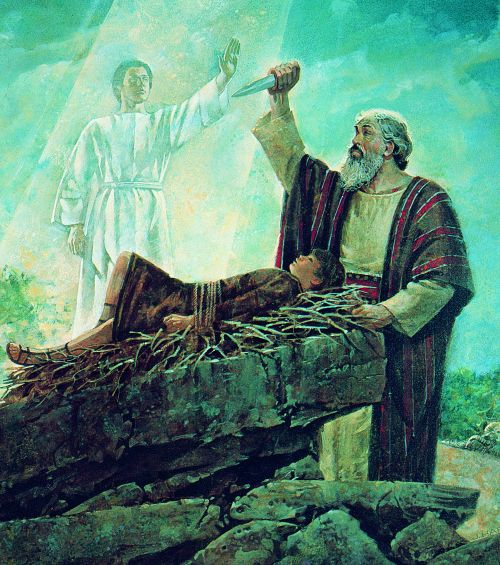
The image that comes to mind is of Abraham being willing to sacrifice Isaac, to kill his own son because God told him to. While this story is rich with spiritual significance, I must confess I find it hard to connect to this biblical story because of the extreme demands placed upon this sincere and trusting father. 

The definition of sacrifice is "to surrender or give up, or permit injury or disadvantage to, for the sake of something else" (dictionary.com) which is the story of Abraham and Isaac in a nutshell - Abraham was willing to surrender and permit injury to his son for the sake of following the orders of God. Abraham passed the test of surrender and was allowed to sacrifice a lamb in Isaac's stead. 

But the story haunts me. 

Do I have that level of faith in God's instructions?

Uh, no.  

Would I have faith in a God who demanded me to kill my son? 

I don't know. 

Which brings us back to the point that sacrifice is a loaded word - sacrifice seems to demand much from us, maybe even beyond our capabilities. 

Which begs the question, then: Why on earth would anyone sacrifice anything at all? 

Krishna says: To purify our hearts. 

Certainly Abraham was put in the fire of faith, and he was forced to throw all of his doubts into that fire, and those doubts burned to ashes. He was purified and cleansed. 

This verse from the Gita emphasizes that "sacrifice, charity, and penance" are essential to living a cultured, elevated life and should not be given up. These actions all emphasize one's willingness to surrender and give up one's time, money, energy, and being for the sake of something else. That "something else" in this case is to become pure. 

Sacrifice, penance, and even purity are all rather abstract. 

So Prabhupad gets concrete: marriage. He writes, "The marriage ceremony, for example, is considered to be one of these sacrifices. It is called vivāha-yajña." Marriage is a sacrifice - something that we surrender to, maybe even permit injury to ourselves or others (??) for the sake of something else. Maybe this is not us being willing to kill our own son for the sake of following God's orders, so what is that "something else" that we're surrendering to in marriage? 

Why on earth does the institution of marriage even exist? 

The most accurate available evidence suggests that the institution of marriage has been around for over 4,000 years (theweek.org). Marriage negotiations and ceremonies characterize ancient civilizations from all over the world. This shows that marriage is an integral aspect to human civilization, and we must conclude that it benefits human welfare. 

Why? Well, the most logical response is that marriage has always been more of a business deal than a romantic fairy tale, benefitting (quite frankly) men. Women were bartered like property and dowry prices were negotiated like sacks of wheat. From a historical perspective, it seems that women got the bad end of the stick and were abused and treated like animals for millennia in archaic marriage systems. 

But Krishna says here, 5,000 years ago, that "any sacrifice which is meant for human welfare should never be given up," and marriage is one of those sacrifices. Krishna is not only speaking on behalf of men who are doing all the bartering and arranging. Women are human beings also, and He is speaking on their behalf - marriage benefits women.

Marriage is a sacrifice, a surrender, a kind of austerity, or a "voluntary suffering" for both men AND women, and these kinds of activities generate power and cleanse the heart. Cleansing the human heart of lust, anger, and greed is meant for the true welfare and upliftment of society, not just economical advantages that can be gained and lost with a turning of the moon. True upliftment of society and human welfare means that the human mind and heart is cleansed and becomes peaceful. Prabhupad writes, "Vivāha-yajña, the marriage ceremony, is meant to regulate the human mind so that it may become peaceful for spiritual advancement." This is the goal of any sacrifice or austerity: spiritual advancement. 

In modern times, marriage has become obsessively centered around "love." I must confess, I always wanted to marry someone I "loved" and I wanted to ensure we loved each other for our whole lives. 

But the deeper significance to wanting to love and be loved within a marriage 'til death do we part is this even deeper desire and goal for divine, pure love - a loving, eternal relationship with God. This is a spiritual goal, something that cannot be experienced in a worldly relationship. But by being in a healthy marriage, we learn how to cleanse and purify our hearts, which makes us peaceful and open to spiritual advancement. That is the goal of marriage. 

Full purport here: https://vedabase.io/en/library/bg/18/5/

First recorded marriage: https://theweek.com/articles/528746/origins-marriage#:~:text=The%20first%20recorded%20evidence%20of,Hebrews%2C%20Greeks%2C%20and%20Romans.

Monday, November 30, 2020

71: The Function of the Soul

CHAPTER 16, TEXT 21: There are three gates leading to this hell – lust, anger and greed. Every sane man should give these up, for they lead to the degradation of the soul.

One evening many years ago, I was traveling on a bus. The driver of the bus, an elderly, spiritual man, was having a conversation with another traveler, and I eavesdropped on their conversation. 

The man asked, "What is the function of the soul?"

The traveler was silent. My ears perked up and I leaned in to hear the man answer his own question:

"To desire. The function of the soul is to desire," 

Those simple words rang with an eternal truth, and they have echoed in my mind in the many years since. Interesting, no? I can still remember the deep blue evening light, the headlights from oncoming vehicles, the silhouettes of spiky trees as they rushed by. Those words anchor me to that time and space: The function of the soul is to desire

I have seen this eternal truth play out in my life and in the world.

When the soul is in touch with material energy, that eternal propensity to desire transforms into lust. Trying to satisfy the soul's eternal, spiritual desires with temporary, material things is a recipe for frustration, drama, and pain. I speak from experience, here, and I'm sure anyone reading this post would say the same. 

In this verse of the Gita, Krishna is saying that there are three gates leading to hell - lust, anger, and greed. Prabhupad emphasizes, though, that lust is the origin: "One tries to satisfy his lust, and when he cannot, anger and greed arise." Note that Prabhupad writes that one "tries" to satisfy lust, but he "cannot" - it is simply impossible to satisfy lust, like trying to put out a raging fire by feeding it logs soaked with gasoline. It is eventual that one will get to the point of anger and an even more inflamed greed. In verse 12 of this chapter, Krishna describes that an ungodly person is "bound by a network of hundreds of thousands of desires" which is not an exaggeration. Hundreds of thousands of desires may even be an understatement. Those desires lead to the degradation of the soul, as Krishna says in this verse. 

Why? Where does lust come from, this raging fire of desire?

The soul. 

The function of the soul is to desire. 

To quench this fire of desire IS impossible, because to do so would snuff out our very existence. 

The key, then, is to understand that this nature to desire something and someone, always, is divine. Originally, the soul desires to love and be loved, and ultimately to love God and be loved by God. 

The whole process of bhakti yoga is about taking those tendencies of the soul offering them to Krishna. In this way the soul is not degraded, but uplifted.  

Desire Krishna. Desire to serve, desire to connect, desire to love. 

Full purport here: https://vedabase.io/en/library/bg/16/21/


Wednesday, November 25, 2020

66: Reality Always Wins

CHAPTER 15, TEXT 5: Those who are free from false prestige, illusion and false association, who understand the eternal, who are done with material lust, who are freed from the dualities of happiness and distress, and who, unbewildered, know how to surrender unto the Supreme Person attain to that eternal kingdom.

Scientists are the usual go-to people to find out the data, the facts, the reality of this world. Scientists break down the functions of the body, calculate the patterns of weather, and discover new ways to combine elements. They rely on cold hard facts to conduct experiments, and they use the scientific method to ensure that their process is legitimate. 

Scientists are who we, as a human society, rely upon to make sense of the world. 

So much of the Gita, though, emphasizes that human society cannot distinguish reality from illusion. This verse of the Gita uses the words "false", "illusion", and "being free" and "unbewildered" multiple times. Material scientists are minimized as a source for understanding reality; if we want to understand reality, we must approach a spiritual teacher, we must approach scripture to understand what is false and how to be free. 

A basic principle of reality that human beings cannot seem to grasp is that we will all die. All of us. Every single one of us. Believing that we shall live forever, we build a life thinking it will last forever and thus feel a sense of pride in self, family, and country. Prabhupad writes, "Pride is due to illusion, for although one comes here, stays for a brief time and then goes away, he has the foolish notion that he is the lord of the world." The phrase here "lord of the world" is significant - even men and women who are leaders of great countries or have vast amounts of wealth will die one day and be forgotten in the sands of time. What to speak of all of us non-royal, non-wealthy, non-talented little people down here - you know, 99.999% of the world. We will all just vanish into thin air when death claims us. BUT STILL - even us little people believe we are lords of the world. 

Even us. 

This is illusion. 

But because we believe we're lords of the world, "[T]hus [we] makes all things complicated, and [we are] always in trouble. The whole world moves under this impression." For example, modern human society invents complicated machines to speed up the process of doing laundry, cooking, and transportation. But then we create so many other problems, namely air pollution, landfills, and waterway contamination. In this way we're always in trouble - one material solution creates a hundred problems. 

Ultimately, "People are considering the land, this earth, to belong to human society, and they have divided the land under the false impression that they are the proprietors. One has to get out of this false notion that human society is the proprietor of this world." Prabhupad says the word "false" twice here - false means that the understanding is incorrect and not based on reality. In this world we operate under this principle, that human society is the pinnacle of existence, and that we own all the land and animals and plants on the planet. But how is that? How do humans have the absolute say? Prabhupad asserts that we must "get out" of this false notion. We are not the proprietors of anyone. 

Prabhupad writes that "One has to cultivate knowledge of what is actually his own and what is actually not his own." So then what IS our own? Do I even own anything? Honestly, after reading this verse and purport, I'm not even sure. Is it possible for a spirit soul to own anything? Well, I guess I own my choices. That's the only reality I can be sure of. 

"When one has an understanding of things as they are, he becomes free from all dual conceptions such as happiness and distress, pleasure and pain." The goal of scientists is to solve the world's problems, to increase happiness and decrease distress, to increase pleasure and decrease pain. But the goal of the transcendentalist is to rise above these dualities, understanding that they will ebb and flow like the tide for eternity. This is reality. 


Full purport here: https://vedabase.io/en/library/bg/15/5/

Sunday, November 22, 2020

63: Divine Fire

CHAPTER 14, TEXT 12: O chief of the Bhāratas, when there is an increase in the mode of passion the symptoms of great attachment, fruitive activity, intense endeavor, and uncontrollable desire and hankering develop.

In the three modes of material nature that Krishna is describing in this 14th chapter, the primary mode that I identify with is the mode of passion. 

Krishna describes in the seventh verse, "The mode of passion is born of unlimited desires and longings." 

Yesss. 

Unlimited desires.

Like a fire. The fire is blazing and hot and demands fuel. I feel the burn and so with great effort and sacrifice I find the fuel to place into the fire - but the fire only increases. The fire burns brighter and hotter, demanding even more fuel than before. 

This is my life. 

My desires are unlimited. From clothing to contact lenses. From shoes to dining chairs to trips to India. To earrings to pairs of glasses to a Mercedes-Benz SUV to analmondmilkmaker to a gymmembership

toawafflemakertorunningshoestomoreearrings

on and on and on and on and on

and on. 

Not only do I yearn for tangible things, I yearn for intangible things, like a good job, good friends, recognition, degrees and accolades, invitations, and more. Prabhupad writes, "One in the mode of passion is never satisfied with the position he has already acquired; he hankers to increase his position." Always more. A fire doesn't burn peacefully at one steady level. The fire is consuming the fuel, and if the fire is not fed more, the flames begin to die out. 

For some reason, I am deathly afraid of those flames going out - it's almost as if I let those flames go out, my very life would go out. I would have no spice to life, no reason to live. So my desires burn in my heart, and I feed them; I am always hankering to increase my position and my things and my importance. 

Why? Why do I burn with so many desires?

Well, to enjoy. I want to enjoy my senses, both subtle and gross. For my gross senses I want to taste good food and drink, I want to see beautiful things and cool movies, I want to relax in a comfortable chair. For the subtle ways to enjoy, I want the prestige of having beautiful things and others admiring what  I own, I want the honor of having a prestigious job and being seen as accomplished and powerful. For the person in the mode of passion (like me), "he develops a great hankering for sense gratification. There is no end to sense gratification."

No. End. As Krishna says in this verse, "uncontrollable desires" develop in the mode of passion. 

I'd like to say that I'm on a spiritual path and want to learn how to love and clean my heart and all that. 

At the same time, the fact of the matter is that if you really pulled back the cover of my heart and peeked inside, that is what you would see: a blazing fire of desires consuming my mind at all times. 

Right now, I do not have any easy solution to these all-consuming desires, so simple trick to reduce the fire. The only way is to stop feeding them, and the prospect of not feeding them seems almost impossible right now. As I mentioned, feeding desires substitutes for a sense of purpose - it's easier to shop and acquire things than to live a purposeful life of navigating tricky relationships. To be honest, I choose shopping over calling a friend or spiritual activities. 

So yeah, I don't have a solution. 

But as I write this, some small voice is reminding me: there is a spiritual greed. 

That greed is called laulyam

You don't have to extinguish the fire of desire in your heart.

Just start feeding your fire some spiritual goals, some uplifting desires. 

Being consumed with greed to know and love Krishna, or krishna laulyam, is a divine fire, a fire that I actually want to burn in my heart. 

Full purport here: https://vedabase.io/en/library/bg/14/12/

Saturday, November 21, 2020

62: Illuminating Presence

CHAPTER 13, TEXT 34: O son of Bharata, as the sun alone illuminates all this universe, so does the living entity, one within the body, illuminate the entire body by consciousness.

So simple. 

So sublime. 

The sun is one, and yet it illuminates and animates the whole earth. A symptom that the sun exists is that we see light. 

Krishna says in this verse that similarly, the tiny spark of the soul illuminates the body. A symptom that the soul exists is that we experience consciousness. Prabhupad writes, "Thus consciousness is the proof of the presence of the soul, as sunshine or light is the proof of the presence of the sun." One may ask how  consciousness is "proof" of the presence of the soul - why are there no other ways to prove the presence of the soul - say a microscope? Of some kind of energy meter...? 

In the previous verse, Krishna compares the soul to the sky - how the sky mixes with everything and at the same time is aloof and is never contaminated. The purport reads, "Similarly, the living entity, even though situated in varieties of bodies, is aloof from them due to his subtle nature. Therefore it is impossible to see with the material eyes how the living entity is in contact with this body and how he is out of it after the destruction of the body. No one in science can ascertain this" (13.33). The very nature of the soul is subtle and immeasurable to some kind of microscope or energy meter. Trying to manufacture some method to directly perceive the soul is pointless. As Prabhupad mentions here, "no one in science can ascertain" the soul or how or when it moves and functions. The soul itself is subtle. 

But we can perceive the soul through the symptoms of the soul, and the most obvious symptom is consciousness. We don't need fancy instruments or fancy scientific calculations to perceive the soul. The logic is simple: "When the soul is present in the body, there is consciousness all over the body, and as soon as the soul has passed from the body there is no more consciousness. 

"This can be easily understood by any intelligent man." 

Yes! The key word here is "easily" - this is easily understood! How is someone who has died referenced?

"She left us."

"He is gone."

"She is no longer with us."

Or maybe someone in grief, weeping at the bedside crying out, "Where are you?"

In all these situations, the body is right there. How is he or she "gone" or "no longer with us" and why would one say, "where are you?" if we can touch and see the body? 

The soul has gone, the soul is no longer with us, we are asking where the soul is. The soul is what illuminated the body with consciousness, like the sun illuminating the earth. "Therefore consciousness is not a product of the combinations of matter. It is the symptom of the living entity."

The living entity is not a product of matter - the soul is of a spiritual, divine nature. 

So simple. 

So sublime. 

The most reassuring part is that over and over again in the Gita and in other Vedic scriptures the soul is described as "eternal" and "undying", so when the soul "leaves" the body it's not like the soul is snuffed out like a candle, forever extinguished into oblivion. (This is a common belief of atheists.)

No. The soul leaves the body and moves on to another body. I mean, if the soul is eternal (and not just snuffed out) and it's not ready to go to heaven or back to God, what else would the soul do? The soul has a journey. Each body is a portion of the soul's journey.

I hope I can use this time wisely while my soul is in this current body. 

I hope to cultivate love and cleanse my heart, and seek God. 

I hope to live a life of purpose with each day, no matter how simple. 

And when the day comes when the lights go out forever on this life in this body and my soul travels on to my next destination, I hope the journey will take me ever closer to love and to God. 


Full purport here: https://vedabase.io/en/library/bg/13/34/

Friday, November 20, 2020

61: The One Who Takes My Hand

 CHAPTER 13, TEXT 26: Again there are those who, although not conversant in spiritual knowledge, begin to worship the Supreme Person upon hearing about Him from others. Because of their tendency to hear from authorities, they also transcend the path of birth and death.

When I was teaching in New York City, the fourth grade teacher at my school told me a story: 

"I told Kaya (pseudonym) to quiet down and stay in her chair. 

She then fired back, 'This is a free country,'"

You may commend this girl for using her intelligence - that comeback is snappy. At the same time, if you look just a little deeper at her words, you can see a kind of deep unwillingness to accept authority. No one is "above" her or has the right to give her directions - her reasoning is that we are all free and thus we are all equal. 

The word "educate" derives its meaning from the Latin "educare" which means "to lead out." This implies that someone is in a kind of darkness of ignorance (the student) and someone is leading that person out into the light (the teacher) (much like Plato's Allegory of the Cave).

In this sense, student and teacher are not equal. One is more knowledgeable and is helping the other, so that person is the authority. 

The hardest part about education is to surrender to authority, whether that is to superior knowledge, a teacher, a path, a lifestyle, and more. Surrender begins with the process of hearing, for words may enter the heart and brain and wake up deep inside a longing, a curiosity, an emptiness. 

Words have a mystical power to touch the soul. 

The ancient process for any kind of progress, but especially spiritual, is to hear from an authority with submissiveness. Prabhupad writes, "Lord Caitanya, who preached Kṛṣṇa consciousness in the modern world, gave great stress to hearing because if the common man simply hears from authoritative sources he can progress." Note that Prabhupad emphasizes that the "common man" can progress - not the scholar or the spiritualist but the common man. 

That's you and me, buddy. 

Krishna describes in this verse a person who has the "tendency to hear from authorities" - the key word here is "tendency." Even more important that downloading loads of knowledge is to cultivate that tendency to hear, an inclination and even hunger to hear. 

Prabhupad writes that the common man must "simply hear" from an authoritative source. 

That said, 

there is "hearing"

and there is "listening." 

Did Kaya hear her teacher's instructions? Yes.

Did Kaya listen to her teacher's instructions? No. 

Listening implies submissiveness, a willingness to learn, a willingness to be lead out of the dark, aware that one is even in the dark. 

Listening means that one wants the light, is open and ready to change and transform. 

The Sanskrit word used in this verse is sruti, which is translated as "hearing." This word is also intimately used in connection to or alludes to the Vedas, the ancient scriptures of spiritual knowledge. This means that hearing doesn't just mean the physical experience of processing raw sound. Hearing means that one should hear spiritual knowledge of great weight and authority (such as the Vedas) in order to be transformed and lead out of the darkness. 

Hearing, then, means accepting authority. Hearing from an authority who is knowledgeable and of impeccable character is a special, rare opportunity in this world. Prabhupad emphasizes that "One should learn to become the servant of those who are in knowledge of the Supreme Lord." This means that to truly prepare the heart to hear from an authority, to serve that person opens up one to the light.  

This story of the girl Kaya - the girl who refused to follow the directions of her teacher with her claim that this is a free country - rankles me so much because, frankly, I have a bit of Kaya within my own heart. I don't want to surrender to someone who will tell me the Truth and show me the Way. I want to find my own truth, find my own way. 

Yes, this is a free country, and I am free. No one should have the power to tell me what to do. 

So.

I'll take baby steps. 

There are a few people in this world whose authority I accept in deep, quiet way. One of those authorities is Bhaktivedanta Swami Prabhupad, the man who writes purports to these verses of the Gita. Sure, maybe I'm still a bit like Kaya when I hear some of his directions, and at the same time I trust him.  

I'd bet that Kaya did not trust her 4th-grade teacher. So why would she follow her directions? 

I trust that Prabhupad is taking my hand in his strong, gentle hand. Although I may dig in my heels and turn away, still with gentility and firmness and kindness, he leads me towards the light. 

Full purport here: https://vedabase.io/en/library/bg/13/26/