Tuesday, December 8, 2020

76: Bodily Discomfort

CHAPTER 18, TEXT 8: Anyone who gives up prescribed duties as troublesome or out of fear of bodily discomfort is said to have renounced in the mode of passion. Such action never leads to the elevation of renunciation.

Waking up early in the morning - before the sun rises - to engage in spiritual habits like mantra meditation and devotional singing is considered a foundation for building a strong spiritual practice and consequently a strong spiritual life. 

Let's be honest: waking up early can make for a lot of "bodily discomfort." 

That moment when the alarm rights at 5am? Man. I used to wake up at 5am for years when I taught in New York City, and I kind of got used to it... but not really. Most mornings coming to consciousness was like rising out of molasses, and climbing out of a warm bed into a cold room was as good as scaling Mount Rainier. 

Despite the bodily discomfort, did I do my duty? Yes sir. I woke up. I did mantra meditation. I took a shower and got ready for work and left the apartment often before the sun had even risen. 

But now that I am taking time off from work, right now the prospect of rising early is as palatable and practical as scaling Mount Rainier... in my pajamas. 

That said, Krishna emphasizes in this verse that prescribed duties should not be given up. Prabhupad expands on this point by saying that, "If by ... rising early in the morning one can advance his transcendental Kṛṣṇa consciousness, one should not desist out of fear or because such activities are considered troublesome. Such renunciation is in the mode of passion." Right now I could probably say that I have renounced the activity of rising early in the morning in order to advance my Krsna consciousness. Without work to speed me on, I find no need to swim through molasses and climb a mountain just to do mantra meditation that I end up falling asleep trying to do. That said, renouncing this activity out of bodily discomfort is in the mode of passion, and Prabhupad says that, "The result of passionate work is always miserable." 

I can feel that. I can feel that waking up later, at around 7:30am, is a kind of meek and mundane way to trod through life. Even miserable.  

Forcing myself to follow my prescribed duties or what I know I "should" do has just lead me down a lot of Heartbreak Highways and Dutiful Dead-ends. I am striving to be more compassionate with myself, but it's hard.

I know the highest standard. This verse and Prabhupad say it all quite clearly.  

I'm just not there.

For now. 

And that's all I can do right now. No forcing, just accepting. 

Full purport here: https://vedabase.io/en/library/bg/18/8/

Monday, December 7, 2020

75: The Goal of Marriage

CHAPTER 18, TEXT 5: Acts of sacrifice, charity and penance are not to be given up; they must be performed. Indeed, sacrifice, charity and penance purify even the great souls.

Sacrifice is a loaded word. 

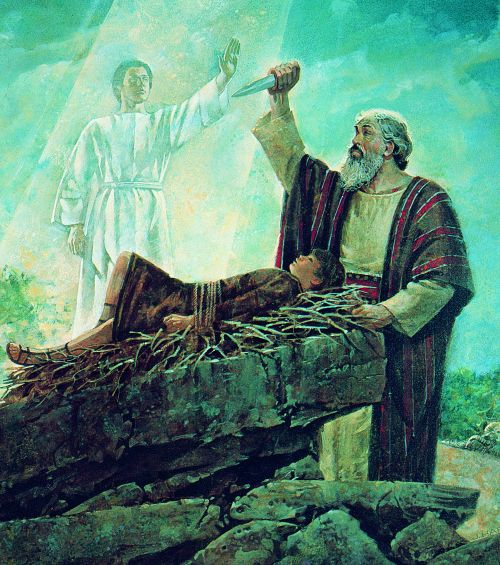
The image that comes to mind is of Abraham being willing to sacrifice Isaac, to kill his own son because God told him to. While this story is rich with spiritual significance, I must confess I find it hard to connect to this biblical story because of the extreme demands placed upon this sincere and trusting father. 

The definition of sacrifice is "to surrender or give up, or permit injury or disadvantage to, for the sake of something else" (dictionary.com) which is the story of Abraham and Isaac in a nutshell - Abraham was willing to surrender and permit injury to his son for the sake of following the orders of God. Abraham passed the test of surrender and was allowed to sacrifice a lamb in Isaac's stead. 

But the story haunts me. 

Do I have that level of faith in God's instructions?

Uh, no.  

Would I have faith in a God who demanded me to kill my son? 

I don't know. 

Which brings us back to the point that sacrifice is a loaded word - sacrifice seems to demand much from us, maybe even beyond our capabilities. 

Which begs the question, then: Why on earth would anyone sacrifice anything at all? 

Krishna says: To purify our hearts. 

Certainly Abraham was put in the fire of faith, and he was forced to throw all of his doubts into that fire, and those doubts burned to ashes. He was purified and cleansed. 

This verse from the Gita emphasizes that "sacrifice, charity, and penance" are essential to living a cultured, elevated life and should not be given up. These actions all emphasize one's willingness to surrender and give up one's time, money, energy, and being for the sake of something else. That "something else" in this case is to become pure. 

Sacrifice, penance, and even purity are all rather abstract. 

So Prabhupad gets concrete: marriage. He writes, "The marriage ceremony, for example, is considered to be one of these sacrifices. It is called vivāha-yajña." Marriage is a sacrifice - something that we surrender to, maybe even permit injury to ourselves or others (??) for the sake of something else. Maybe this is not us being willing to kill our own son for the sake of following God's orders, so what is that "something else" that we're surrendering to in marriage? 

Why on earth does the institution of marriage even exist? 

The most accurate available evidence suggests that the institution of marriage has been around for over 4,000 years (theweek.org). Marriage negotiations and ceremonies characterize ancient civilizations from all over the world. This shows that marriage is an integral aspect to human civilization, and we must conclude that it benefits human welfare. 

Why? Well, the most logical response is that marriage has always been more of a business deal than a romantic fairy tale, benefitting (quite frankly) men. Women were bartered like property and dowry prices were negotiated like sacks of wheat. From a historical perspective, it seems that women got the bad end of the stick and were abused and treated like animals for millennia in archaic marriage systems. 

But Krishna says here, 5,000 years ago, that "any sacrifice which is meant for human welfare should never be given up," and marriage is one of those sacrifices. Krishna is not only speaking on behalf of men who are doing all the bartering and arranging. Women are human beings also, and He is speaking on their behalf - marriage benefits women.

Marriage is a sacrifice, a surrender, a kind of austerity, or a "voluntary suffering" for both men AND women, and these kinds of activities generate power and cleanse the heart. Cleansing the human heart of lust, anger, and greed is meant for the true welfare and upliftment of society, not just economical advantages that can be gained and lost with a turning of the moon. True upliftment of society and human welfare means that the human mind and heart is cleansed and becomes peaceful. Prabhupad writes, "Vivāha-yajña, the marriage ceremony, is meant to regulate the human mind so that it may become peaceful for spiritual advancement." This is the goal of any sacrifice or austerity: spiritual advancement. 

In modern times, marriage has become obsessively centered around "love." I must confess, I always wanted to marry someone I "loved" and I wanted to ensure we loved each other for our whole lives. 

But the deeper significance to wanting to love and be loved within a marriage 'til death do we part is this even deeper desire and goal for divine, pure love - a loving, eternal relationship with God. This is a spiritual goal, something that cannot be experienced in a worldly relationship. But by being in a healthy marriage, we learn how to cleanse and purify our hearts, which makes us peaceful and open to spiritual advancement. That is the goal of marriage. 

Full purport here: https://vedabase.io/en/library/bg/18/5/

First recorded marriage: https://theweek.com/articles/528746/origins-marriage#:~:text=The%20first%20recorded%20evidence%20of,Hebrews%2C%20Greeks%2C%20and%20Romans.

Sunday, December 6, 2020

74: "Never was there a time..." Tribute

My first authentic encounter with The Bhagavad-gita As It Is occurred when I was about fifteen years old. The book Illuminations From the Bhagavad-gita took verses from the Gita and illustrate them in exquisite detail. I remember meditating on the ornamentation and the verses for hours. 

This particular verse was illuminated in that book. 

So tonight I decided to offer a humble attempt to illuminate one of my favorite verses of all time, the verse that woke me up to a deep inner peace that my soul is eternal. 


Friday, December 4, 2020

73: The Heat of Speaking (and not speaking!)

CHAPTER 17, TEXT 15: Austerity of speech consists in speaking words that are truthful, pleasing, beneficial, and not agitating to others, and also in regularly reciting Vedic literature.

"Austerity" is one of those arcane words that kind of has the average person going, "Huh?"

Either "austerity" is a foreign word or concept, or there are some vague connections to being rigid, extreme simplicity, or, as Oxford Languages puts it, "conditions characterized by severity, sternness, or asceticism." This last definition comes the closest to the original meaning of austerity. 

But none of these point to why on earth anyone would undergo extreme simplicity, sternness or asceticism. No one in their right mind really wants to be an ascetic. In fact, austerity seems rather like self-harm (masochism)!

The Sanskrit word used in this verse is "tapa" which translates literally as "heat." This is because doing austerity generates a kind of heat, a personal power (or shakti) that ripples out into one's life. 

This is the phenomenon of performing voluntary suffering - we are empowered to achieve a result.

In this way, most of us have all performed austerity for some reason or other - attending school and completing all that homework in order to receive a diploma, putting in overtime hours at a job to make extra money, working out at the gym in order to get a shapely body.   

This is a law of the material world, just like the law of karma. Anyone who undergoes voluntary suffering generates power. This law can be applied in dark ways in order to gain power over others and to reach some exploitative goal, or this law can be applied in auspicious ways in order to be empowered to serve and love others with a clean and open heart. 

For text 15 of chapter 17, we see that Krishna is describing austerity of speech in the mode of goodness. What's fascinating about the wording of this verse is that to be truthful, pleasing, and beneficial in one's speech is austerity - voluntary suffering.

How could be speaking in a truthful and pleasing way be voluntary suffering? 

Because speaking in a deceitful and unpleasant and purposeless way is the default in this world. It's so easy. 

Too easy. 

To speak in a truthful, pleasing, and beneficial way takes hard work. It's depriving us of the delicious and easy tendency to gossip, complain, vent anger, blame, and criticize others. Prabhupad emphasizes that "One should not speak in such a way as to agitate the minds of others." But it's so easy to speak in such a way to agitate the minds of others! So easy! 

Especially loved ones. We know their soft and vulnerable spots - with a well-aimed word we could incite agitation and pain in their minds and hearts. Just a word.

In this verse, Krishna does not give any advice about how to speak; He simply shares the nature of austerity of speech and what it looks like. In a way, He leaves it up to us to decide what we wish to create with our personal power. 

To refrain from speaking words that agitates others is actually voluntary suffering and generates power. 

By being austere in our speech, our hearts become powerful and strong, the heat of austerity coming back to nourish us and strengthen us to love and be loved at our highest potential. 

Full purport here: https://vedabase.io/en/library/bg/17/15/

Thursday, December 3, 2020

72: Spiritual Athlete

CHAPTER 17, TEXT 10: Food prepared more than three hours before being eaten, food that is tasteless, decomposed and putrid, and food consisting of remnants and untouchable things is dear to those in the mode of darkness.

Okay, hold up. 

Waaaaait a second. 

So here we have a 5,000 year old scripture, an epic conversation between God and His warrior friend Arjuna and they're standing between armies of oceanic proportions. Krishna has described the nature of the soul, death, and has even revealed his terrifying universal form of creation and all-devouring time. Yes, yes, this all seems fitting to be featured in an ancient religious scripture. 

And now Krishna is talking about... old food? 

Yes. 

"Food that is prepared more than three hours before being eaten" is in the mode of darkness and should not be eaten - this information is so crucial that Krishna is sharing this knowledge with Arjuna on that battlefield, the poised armies facing each other like scorpions, the fate of the world at stake. 

The Bhagavad-Gita translates as "The Song of God" - this means that the verses that describe Krishna's universal form and verses that talk about old food are just as crucial for God realization as any other verse in this epic. So what is going on here? 

The Gita is a manual for living a fulfilled, purposeful life of fearlessness, joy, and love. Krishna is not  suggesting that Arjuna just be a nice, pious person who goes to church on Sunday, or to ruminate about lofty theological ideas in university classrooms. Krishna declares to his friend that he should, "in all circumstances, be a yogī" (6.46). Being a yogi is about living and breathing self-realization. 

A yogi is a spiritual athlete.

Professional athletes have a coach, a diet, a regimen, a lifestyle, a way of thinking about goals. Tom Brady, a professional football player widely considered to be the Greatest Of All Time (GOAT), trains hard and is careful about what he eats even when it's not football season. And even though he's the GOAT, he still has a coach, he still takes directions, he still practices and practices. 

This is the Gita - an invigorating training regimen to bring us in alignment with our soul and love of God. 

Who's our coach? Krishna - God Himself. And when God says, hey, old food is in the mode of darkness and should not be eaten, well, maybe we should listen. And follow. 

But here's the deal - this advice is tough. After all, what about frozen food and frozen meals? Or leftovers from Thanksgiving? Or just leftovers from lunch? What about all those dishes they have at restaurants and fast food chains that have obviously been prepared days, maybe even weeks beforehand? 

This is where the Gita shows up in our lives, where we make a choice. Do we take the advice of the coach? Do we follow, and do we trust the process? 

This particular verse, Text 10, is surrounded by other verses that talk about lifestyle choices in the various modes of material nature. So Krishna does describe food that one should eat, food in the mode of goodness that elevates our consciousness. Prabhupad elaborates, "The purpose of food is to increase the duration of life, purify the mind and aid bodily strength. This is its only purpose." These words seem very much to come from a coach who is identifying the benefits of a particular training regimen - longer life, purified mind, bodily strength. Those goals are there to assist in self-realization. And to achieve those goals, one must eat food in the mode of goodness, not mode of darkness (ignorance). 

Prabhupad emphasizes here "This is [food's] only purpose" which I find a bit hard to swallow, pardon the pun. After all, food can be delicious! Sometimes I feel the only purpose of food to taste and experience textures, flavors, and temperatures in my mouth. I'm certainly not thinking about a longer life or purified mind. Food's purpose in those moments seem to be about enjoying. 

There is a crucial distinction here, though. Enjoying food is not the purpose of food - it's a side effect. One can enjoy food no matter what mode of nature - in fact, Krishna even says  in this verse that old, putrid, and untouchable food (or meat) is "dear" to those in the mode of darkness. Just because it's dear to them does not make it right or recommended. 

So Krishna - our coach - gives us the information and lets us choose. 

These simple - but hard - choices determines the course of our entire spiritual life. 

That's why Krishna is talking about old food on the midst of a battlefield, poised between armies. Becoming the GOAT is about the big things - understanding the soul and death and time - and it's also about little things - so you gonna eat Thanksgiving leftovers or what? 

Full purport here: https://vedabase.io/en/library/bg/17/10/

Monday, November 30, 2020

71: The Function of the Soul

CHAPTER 16, TEXT 21: There are three gates leading to this hell – lust, anger and greed. Every sane man should give these up, for they lead to the degradation of the soul.

One evening many years ago, I was traveling on a bus. The driver of the bus, an elderly, spiritual man, was having a conversation with another traveler, and I eavesdropped on their conversation. 

The man asked, "What is the function of the soul?"

The traveler was silent. My ears perked up and I leaned in to hear the man answer his own question:

"To desire. The function of the soul is to desire," 

Those simple words rang with an eternal truth, and they have echoed in my mind in the many years since. Interesting, no? I can still remember the deep blue evening light, the headlights from oncoming vehicles, the silhouettes of spiky trees as they rushed by. Those words anchor me to that time and space: The function of the soul is to desire

I have seen this eternal truth play out in my life and in the world.

When the soul is in touch with material energy, that eternal propensity to desire transforms into lust. Trying to satisfy the soul's eternal, spiritual desires with temporary, material things is a recipe for frustration, drama, and pain. I speak from experience, here, and I'm sure anyone reading this post would say the same. 

In this verse of the Gita, Krishna is saying that there are three gates leading to hell - lust, anger, and greed. Prabhupad emphasizes, though, that lust is the origin: "One tries to satisfy his lust, and when he cannot, anger and greed arise." Note that Prabhupad writes that one "tries" to satisfy lust, but he "cannot" - it is simply impossible to satisfy lust, like trying to put out a raging fire by feeding it logs soaked with gasoline. It is eventual that one will get to the point of anger and an even more inflamed greed. In verse 12 of this chapter, Krishna describes that an ungodly person is "bound by a network of hundreds of thousands of desires" which is not an exaggeration. Hundreds of thousands of desires may even be an understatement. Those desires lead to the degradation of the soul, as Krishna says in this verse. 

Why? Where does lust come from, this raging fire of desire?

The soul. 

The function of the soul is to desire. 

To quench this fire of desire IS impossible, because to do so would snuff out our very existence. 

The key, then, is to understand that this nature to desire something and someone, always, is divine. Originally, the soul desires to love and be loved, and ultimately to love God and be loved by God. 

The whole process of bhakti yoga is about taking those tendencies of the soul offering them to Krishna. In this way the soul is not degraded, but uplifted.  

Desire Krishna. Desire to serve, desire to connect, desire to love. 

Full purport here: https://vedabase.io/en/library/bg/16/21/


Sunday, November 29, 2020

70: Looking in the Mirror

CHAPTER 16, TEXT 17: Self-complacent and always impudent, deluded by wealth and false prestige, [the demons] sometimes proudly perform sacrifices in name only, without following any rules or regulations.

The 16th Chapter is entitled "The Divine and Demoniac Natures". I don't know about you, but the word "demoniac" or "demon" brings to mind a red, horned devil with a tail, cackling in hell. 

This is not what is meant when Krishna speaks about the "demons" or "the demoniac." The root Sanskrit word for divine beings (demigods) who favor God is the word sura. These beings possess divine qualities, such as truthfulness, self-control, and modesty (16.1). The word for "demon" is asura, which by the prefix a- tells us that these beings are the opposite of suras - those who oppose God, negate His existence, and possess a host of negative qualities such as lust, impudence, and false prestige (as stated above). 

The demigods and demons are not mythical creatures that hold epic battles in the sky over good and evil. The point of this sixteenth chapter is not to give us a lesson in Hindu cosmology or lore. 

This sixteenth chapter is meant to be a mirror that we hold up to our own hearts. We are meant to read these verses and identify when these qualities resonate in our lives - am I cultivating my divine nature?

Or am I cultivating my demoniac nature? 

I know it's a simplistic, cliched image, but there is even a modern equivalent of this struggle between choosing the divine or the demoniac: the angel and the devil on your shoulder. 

Often, though, this struggle is depicted as a rather vague struggle of conscience and "choosing the right thing" - whatever the "right" thing is (good luck with that). 

The 16th chapter makes this process clear with excruciating detail. An excruciating detail from this Text 17 is the phrase "without following any rules or regulations." Following rules and regulations is a concrete, powerful way to look in the mirror to determine whether one is cultivating a divine or demoniac nature. Rules and regulations are meant to elevate the soul to the mode of goodness, to bring about clean and pure habits. But when rules and regulations are disregarded, this is a red flag that one is sliding towards a demoniac nature. Prabhupad writes, "The word avidhi-pūrvakam, meaning a disregard for the rules and regulations, is especially stressed here." How come? Aren't rules and regulations just restrictions on the spirit, ways to suppress and oppress? 

We find a healthy application of rules and regulations in all spheres of life, from the rules and regulations of a highway, to health codes for restaurants to follow in the preparation and serving of food, to building codes, to the way a school or government or business is run. If one is to drive or serve food or construct a building or manage a government with any degree of success, rules and regulations must be followed. 

This same principle is applied for spiritual life - there are rules and regulations to follow in order to advance on the spiritual path with any success. A defining feature of a rule or regulation is that it is not only applied by one person on a whim - they are applied to any and all people who are participating in that  process. Meaning, there is a somewhat universal standard. 

But "the demons, however, do not care for such restrictions. They think that whatever path one can create is one’s own path; there is no such thing as a standard path one has to follow." Creating one's own path or believing that everything is all relative is a negative tendency, a trait that leads one to cultivate the demoniac nature. 

Why? 

How come not following a standard path is considered so... wrong? What could be so bad about creating something new - you know, blazing a new trail and stuff? 

Often, the desire to not follow a rule or regulation is from a kind of weakness of heart, not because one actually wants to revolutionize the world and do something positive. This "creating" of one's own path is often a guise for a few ways to avoid surrender. 

One - avoid the vulnerable and scary process of submitting to an authority and a higher order, especially if full trust has not been established. 

For example, "My new principal is telling me to write all of these detailed lesson plans in this particular way? Oh whatever, she doesn't know what she's talking about, I'll do them my own way." 

Or, "My spiritual teacher is telling me to lay off the alcohol? He doesn't understand the pain I'm going through with the loss of my mother, I'll drink when and how I need to,"

Two - avoid the hard or frustrating work of actually following a regulation.

For example, "To make sure we follow this building code, we'll have to spend thousands of dollars to hire an architect! We'll just do it our own way..." 

Or, "Vedic scriptures say I should not eat cow? Well, I'll eat free-range beef, at least the cows had a happy life," 

No matter what reasons or excuses are given to not follow a rule or regulation, these are often ways we avoid surrender. We avoid surrender "due to ignorance and illusion." If we had full knowledge, we would see that following the rules and regulations benefits not only ourselves but others, even the entire world. 

Following speed limits, health codes, and building codes is meant to prevent pain and drama and hardship. Rules and regulations are for our own good! They seem restricting but actually offer the greatest freedom. 

Cultivating a demoniac nature is about taking the easy, lazy way out, compromising one's integrity in the process. 

Cultivating a divine nature is about taking the hard, strenuous path which strengthens one's integrity and cleanses the heart. 

I'll finish this post with one of my favorite quotes: 

“If you are willing to do only what's easy, life will be hard. But if you are willing to do what's hard, life will be easy.” - Harv Eker

Full purport here: https://vedabase.io/en/library/bg/16/17/